
Putting AI to Work
Testing Use of AI at Dale Koontz Builder
You’ve probably used or seen AI by now—it’s everywhere. From images and videos on your social media feed, to tools that promise to automate daily tasks, to phones and home devices answering questions and ordering your favorite products. Like most new technology, there are controversial uses for AI, but there are also practical, responsible ones.
At Dale Koontz Builder, we’ve begun experimenting with AI tools, including ChatGPT and the built in AI that comes with our project management software, BuilderTrend. We’re starting in small areas of our business, this isn’t something that runs our company or replaces experience—it’s simply another tool we’ve tested to help with certain routine tasks. Much of what we do is still done the old-fashioned way: by experienced people, planning, and hands-on problem solving.
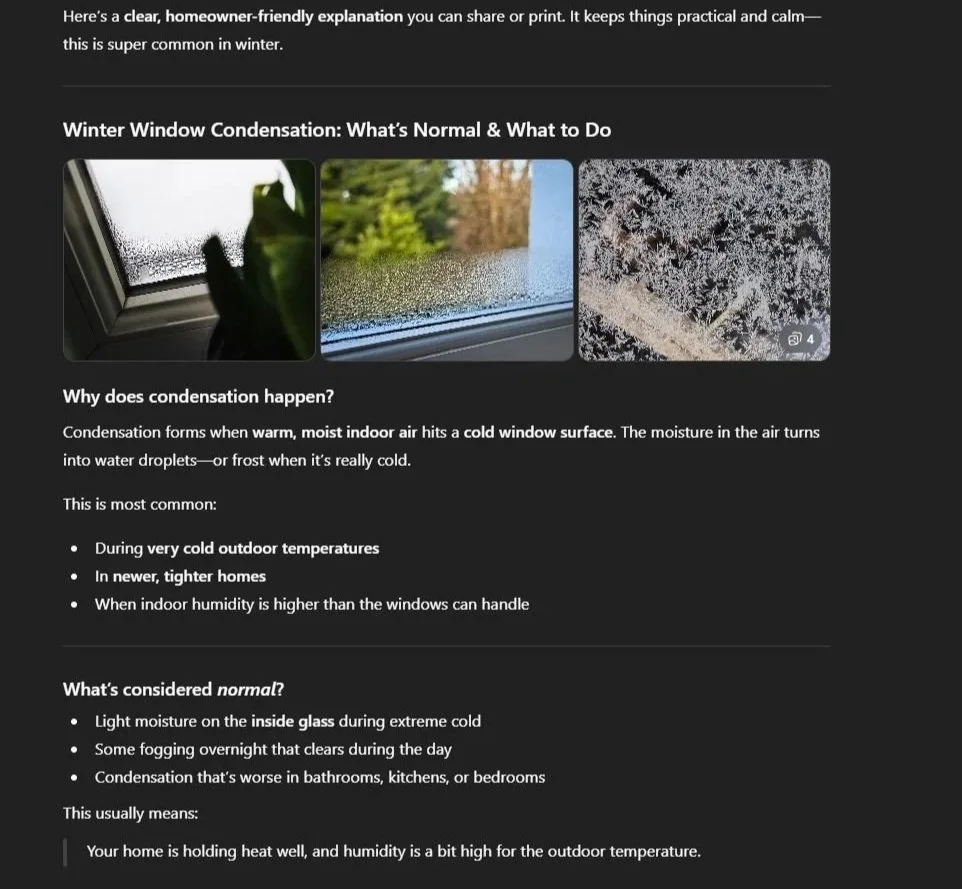
Asking ChatGPT: “Homeowner education on window condensation in winter months”
In the Office
So far, most of our use has been in the office, where AI can save time on low-risk, administrative work.
We’ve used it to proofread and refine marketing materials and written communication, helping us improve clarity and consistency. In some cases, it’s helped us review documents to identify missing or unclear information, serving as an extra set of eyes—not a decision-maker. We’ve also used it to research best practices or emerging construction techniques as a starting point, which we then evaluate based on our experience and local conditions. In addition, it’s helped us draft homeowner education materials, making technical topics easier to understand.
These uses don’t replace judgment or expertise—they simply help us be more efficient with our time.
In the Field
On the jobsite, our approach has been even more selective.
We’ve used AI tools to help draft safety documentation and toolbox talks aligned with current OSHA standards, which we then review and tailor for our crews. This helps us stay organized while keeping safety information consistent.
BuilderTrend, our project management software, can summarize weekly activities on a project and deliver them to the homeowners so they stay in the know.
In certain situations, we’ve also used jobsite photos to think through possible solutions or identify issues, treating it as a brainstorming aid—not a replacement for on-site expertise.
For some remodel projects, we’ve tested using photos and material selections to create quick, rough visualizations. These are not final plans or design documents, but they can be helpful early in the process to support conversations and decision-making.
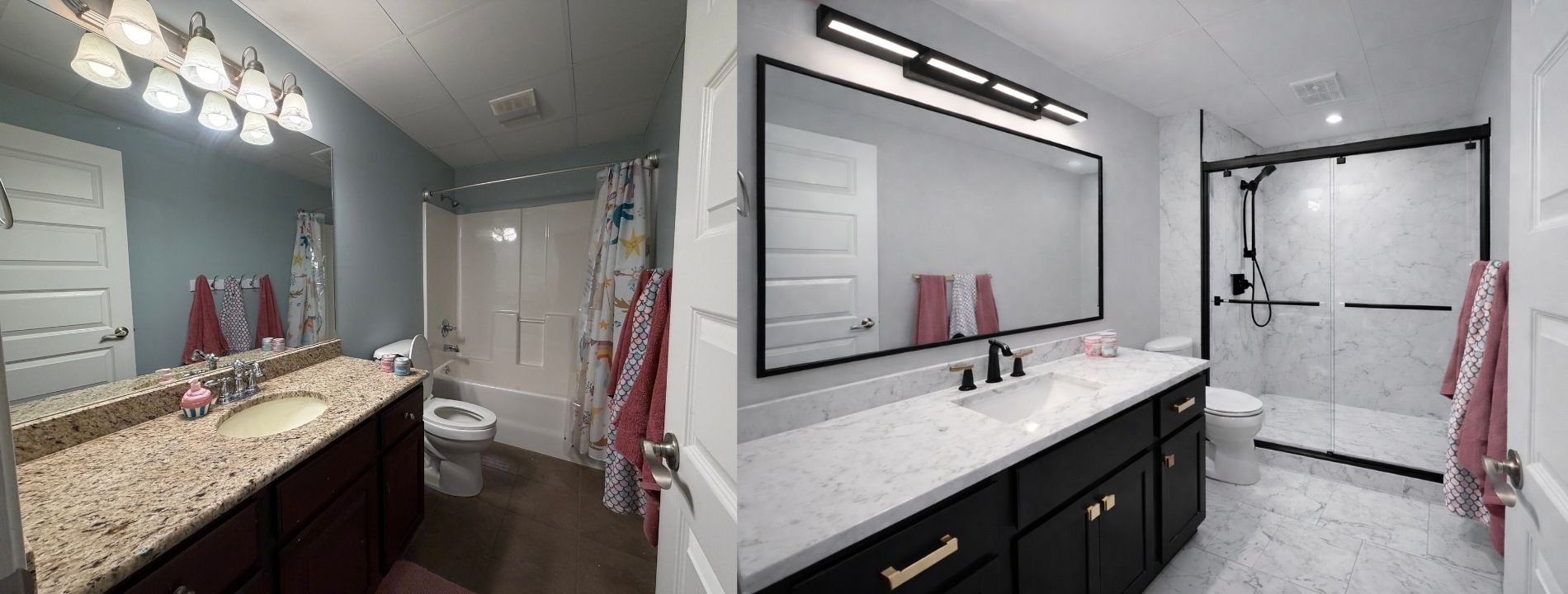
Asking ChatGPT to add a black vanity with carrara top, black and gold fixtures, carrara onyx shower with black sliding glass door, and white paint. Added links to specific box store products for specifics.
Looking Ahead
AI isn’t swinging a hammer—and it won’t be any time soon. The day it builds a house I’m hoping to be retired. The core of what we do is still built on years of experience, craftmanship, and our network of subcontractors and vendors doing things the right way. But like any tool, when used carefully and intentionally, AI can support better planning, clearer communication, and more efficient workflows.
We expect to use these tools more frequently over time, as we continue to evaluate where they add value and where they don’t. Our goal isn’t to chase technology—it’s to use the right tools to improve the work we do and the experience we provide.